
Paid Internship
User Research
Product Design
Graphic Design
User Experience Intern
House of Friendship
2-5 minute read
Team
My Role
Tools Used
Timeline
Hania Khawar
Nida Shanar
Contributed throughout every stage
4 months (May-Aug 2023)
Canva
UserBit
Google Docs
Microsoft Excel
I was fortunate to work as a UX design intern for a men's 24/7 homeless shelter!
I was tasked to streamline their intake process and improve the facility for staff & homeless individuals.
I successfully made great connections, designed a handbook and deliverables & offered research-backed recommendations. 😆 🎉
Overview

Background
House of Friendship ShelterCare in Kitchener, Waterloo is a 24/7 shelter for men experiencing homelessness.


Project Objectives
1
2
Re-design, streamline & enhance the shelters current intake process to benefit shelter residents, staff & management.
Give recommendations on all other aspects of House of Friendship ShelterCare through a final report.

Initial Research & Brainstorming
Empathizing with our main users: shelter residents, staff & management by…
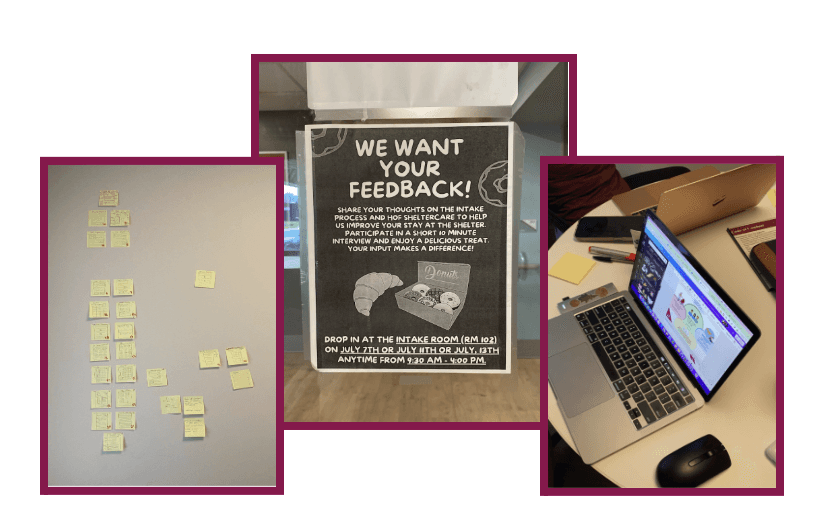
Taking notes throughout allowed us to organize our thoughts and remember important information for the future.
Taking Notes 📝
Intake Shadowing 👀
We shadowed the social work staff during their shifts and intake processes to gain a deeper understanding of their roles and responsibilities.

Competitive Analysis 💭
We visited another shelter called SHIP, to contrast how the intake process works there compared to HoF.


User Research
At the end of our 24 semi-structured interviews we successfully interviewed…



17
6
2
Shelter residents
Staff
Management
User Interviews
We formulated, iterated and re-iterated semi-structured in-person interview questions for shelter residents, staff & management for their thoughts on the current intake process and HoF ShelterCare in general.
We used in-person open card sorting with staff & management where they were asked to re-organized intake documents into piles they saw fit. This was to see how they conceptualized the intake process.
🗃️
Surveys
We formulated, iterated and rewrote survey questions for only shelter residents, in order to get more specific insight from them. Unfortunately, due to time constraints and management input, we did not get to execute the digital surveys.
Observational Insights
I jotted down insights I observed while working as a social worker in the facility and while talking to staff and shelter residents. ✍️

Primary Research

Secondary Research
Synthesis
In order to synthesize our research information, we used userbit;
an online UX tool that helps categorize research information.

Research Findings

• Inconsistent with each staff member
Intake Process Findings
General Findings
❌ Intake problems
• Services not mentioned
🙍🏻♂️
💼
• Lacked clarity
🙍🏻♂️
• Takes too long
💼
💼 = Staff & Management
🙍🏻♂️ = Residents


User Personas
Empathy Map
Journey Map
+/-
Zoom in/out
to read the details!
Prototyping
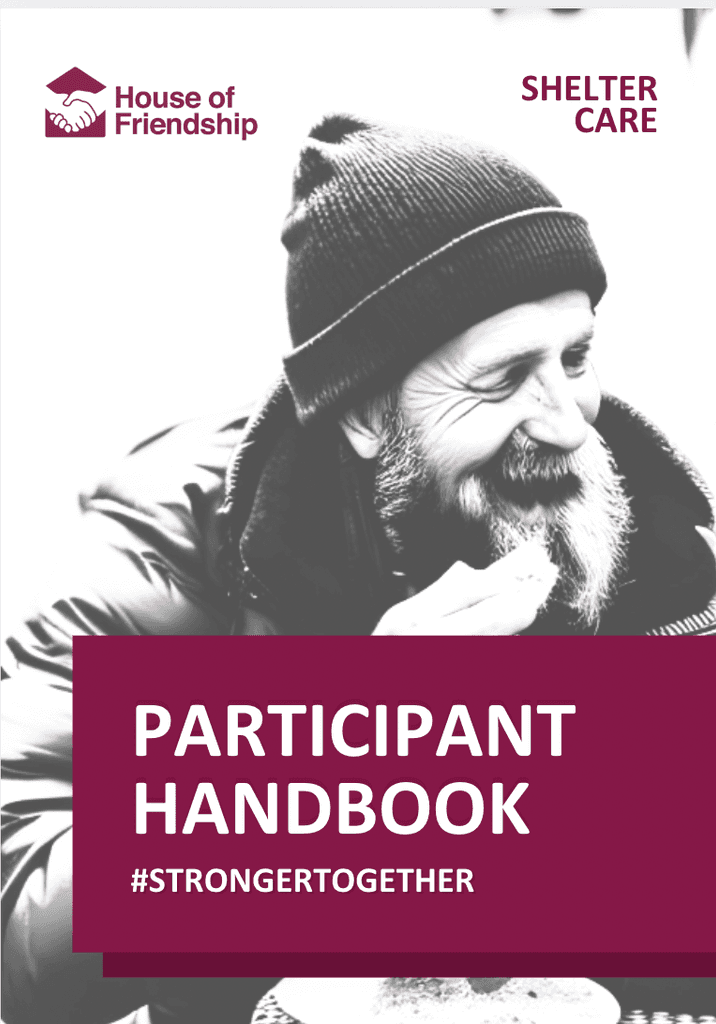
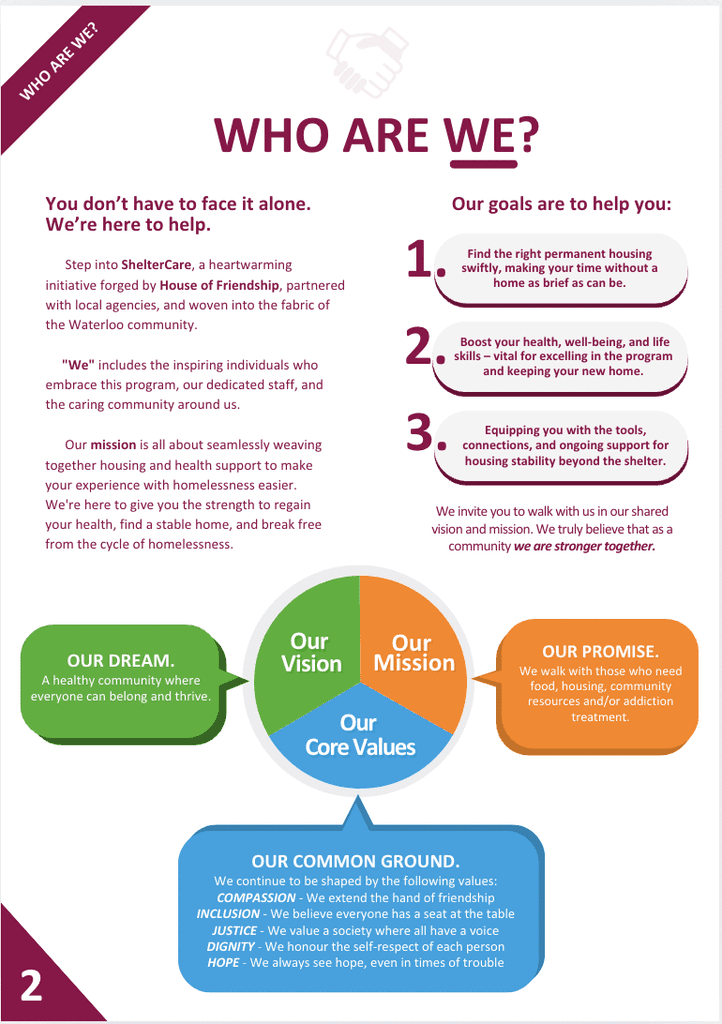
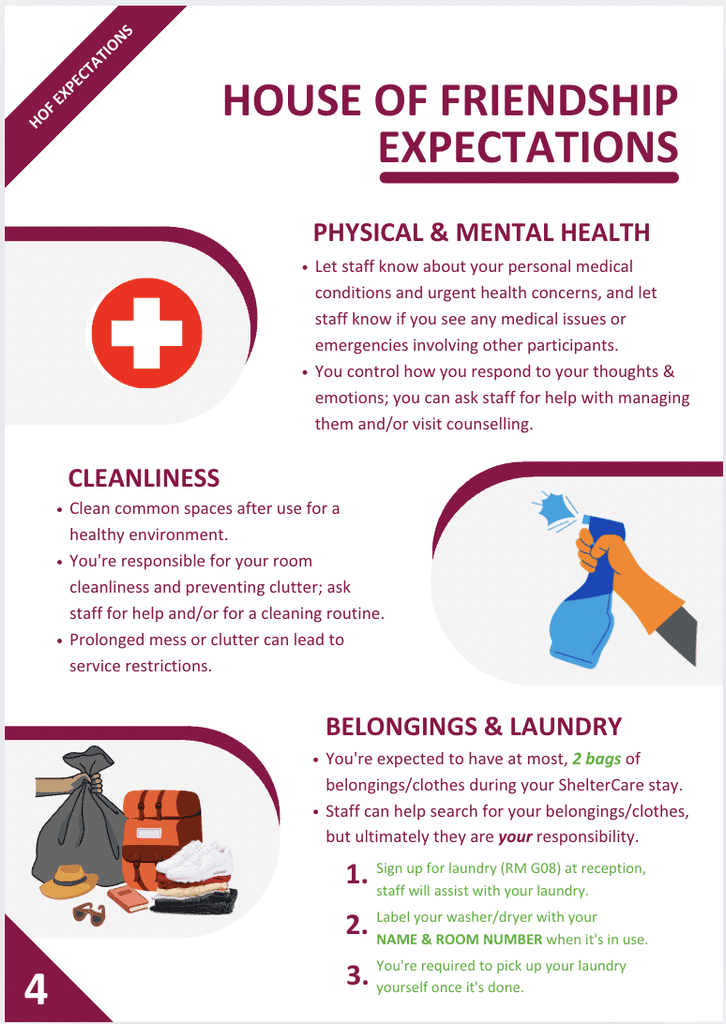
Using Canva, we set out to create a user-friendly handbook. This idea was guided by our research as our pain points and observational insights suggested that an user handbook for participants would be a good tool to mitigate problems participants, staff & management expressed.


Iterating & Testing
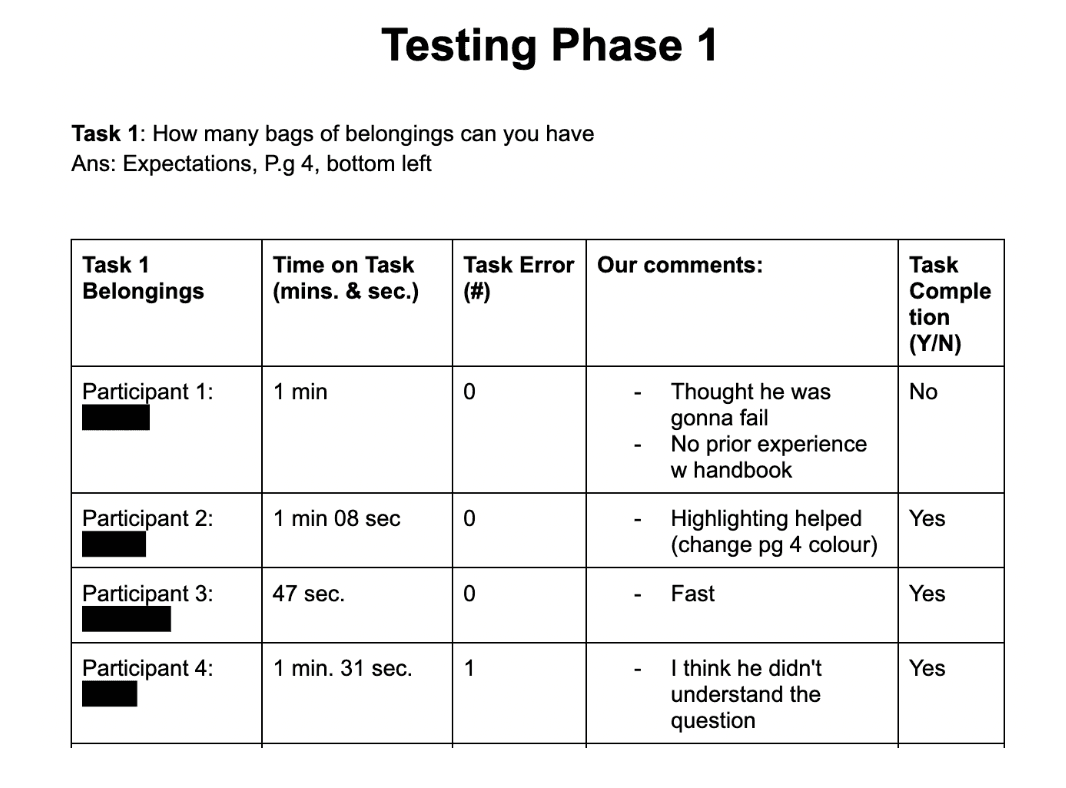
We conducted user testing with the handbook with residents and staff.
We tested with 4 phases.
Final Handbook, Deliverables & Impact
After applying testing insights on the handbook, we landed on the final product.
Next steps…
HoF plans on printing the handbook in-house and handing it out to all residents & staff.
Other Deliverables…

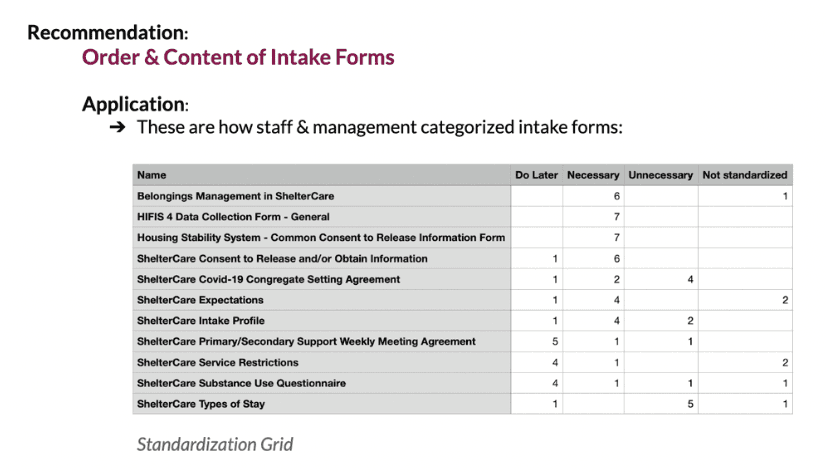
We created a final recommendations report, with summary of our UX process, research data and HoF recommendations and applications to these reccommendations.
Recommendations Report
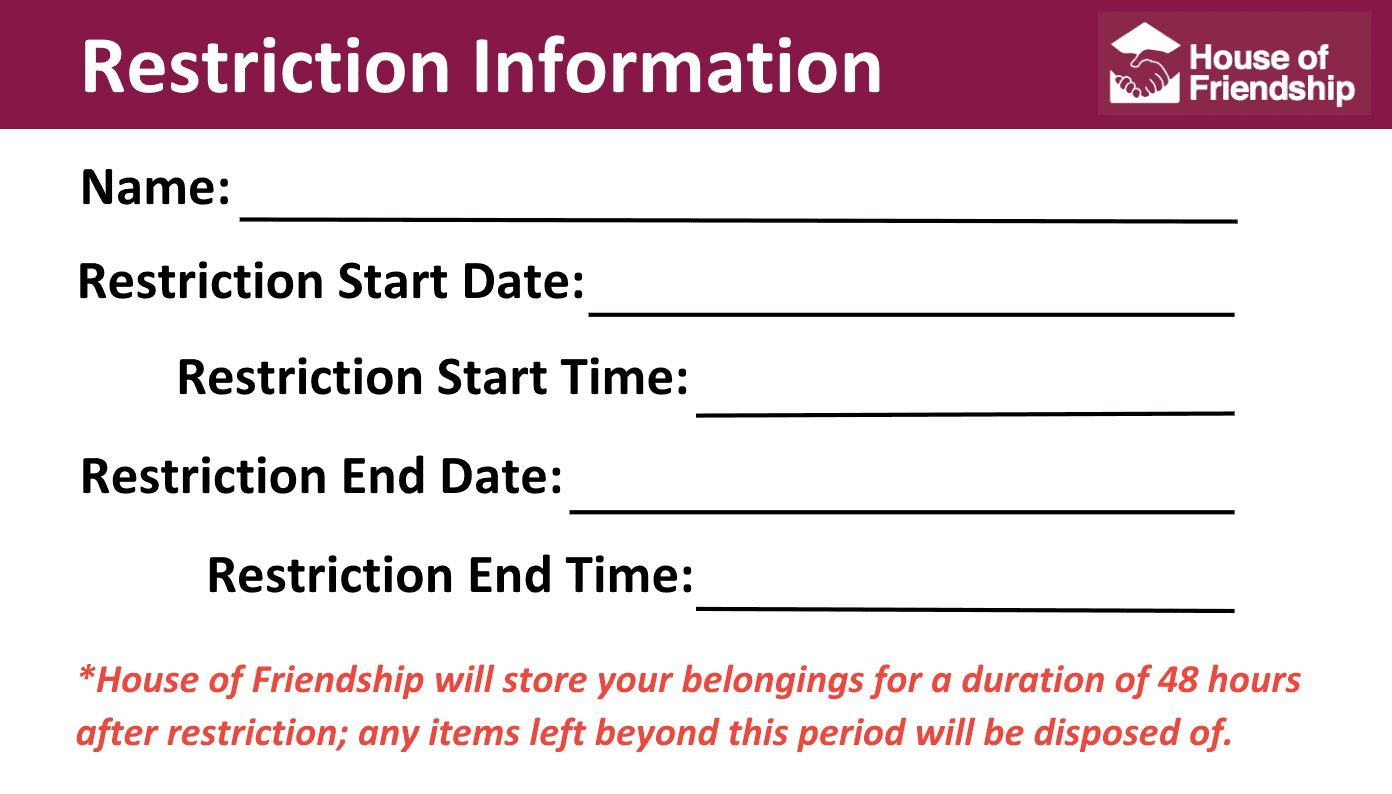
Based on HoF general insights and data,
we designed a restrictions card.
This is for residents who get temporarily restricted from the program, so they’re able to remember when to come back, and what services they can still access in the community.
Restrictions Card

Our data showed staff struggled with communication and tracking room usage for reassignment.
Using Microsoft Excel, I developed a night bed tracker sheet, day/evening/night notes tracking sheet, & a restrictions sheet to help staff organize their notes more clearly and efficiently.
Excel Trackers


The impact of this handbook…
Shelter residents appreciated that their insights were considered,
and were impressed by the tool they now had access to.
Constraints, Challenges & Further Iterations


Ideally, testing would involve new intakes to ensure we’re engaging directly with our target users.
Due to scheduling constraint we were unable to test with new intakes.
Limited time did not allow us to test the handbook to its full capacity.
As a result, there may be factors missing from the handbook that can improve its usability and human-centered design.
Due to limited time, we didn’t have the capacity to reach out to and visit all the shelters we had hoped to include. As a result, we were unable to identify and compare shelters that were sufficiently similar for meaningful analysis.
We also faced challenges in defining and developing clear objectives at the beginning of the process, as the managers were still in the process of determining their objectives.


In the future, the handbook and other final products will likely change and be updated as ShelterCare is still new and constantly evolving.
What I learned & Accomplished
I improved my understanding of the shelter system, individuals experiencing homelessness
& teamwork under constraints. My skills in Canva, Excel, graphic design, and product design also improved.
I gained some great UX experience and met some interesting individuals with their own personal experiences and stories.
2025 ©️ Nida Shanar
You've reached the end! Thanks for taking a look 👀